
How to Choose the Right Landing Page Builder for Your Business
Published Jul 02, 2026 | Updated Jul 04, 2026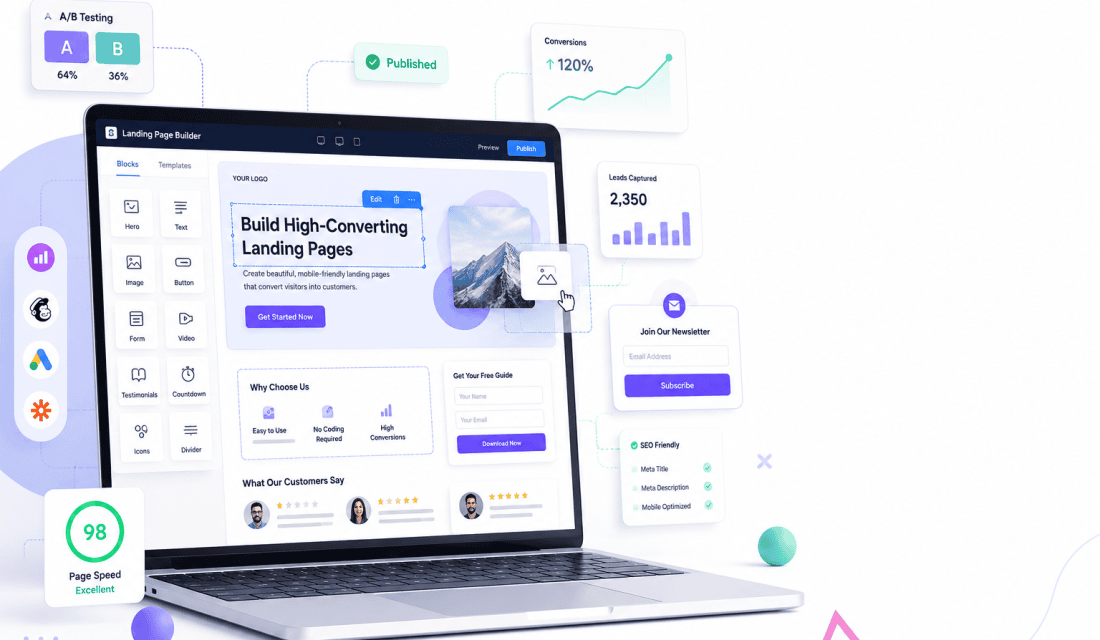
A well-designed landing page can make the difference between a visitor leaving your website and becoming a customer. Whether you’re running paid ads, promoting a webinar, or collecting leads for your sales team, dedicated landing pages help focus attention on a single goal.
With dozens of landing page tools on the market, finding the right one isn’t always easy. Some businesses need advanced collaboration features for managing multiple projects, while others simply want an affordable way to create high-converting pages. Many marketers also compare established platforms before deciding which solution best fits their workflow and budget.
This guide explores the key factors to consider before making a decision.
- What Is a Landing Page Builder?
- Why Businesses Use Dedicated Landing Pages
- Features That Matter Most
- Easy Visual Editing
- Responsive Design
- Template Variety
- Integrations
- Performance Tracking
- Considerations for Marketing Agencies
- Can a Free Solution Be Enough?
- Why People Explore Alternatives to Established Platforms
- Questions to Ask Before Choosing a Platform
- Best Practices for High-Converting Landing Pages
- Final Thoughts
- Frequently Asked Questions (FAQs)
- 1. What is a landing page builder?
- 2. Why should I use a landing page instead of a regular website page?
- 3. What features should I look for in a landing page builder?
- 4. Are free landing page builders worth using?
- 5. How do agencies choose the right landing page builder?
- 6. How important are integrations in a landing page builder?
- 7. Can a landing page builder improve conversion rates?
- 8. How do I choose the best landing page builder for my business?
What Is a Landing Page Builder?
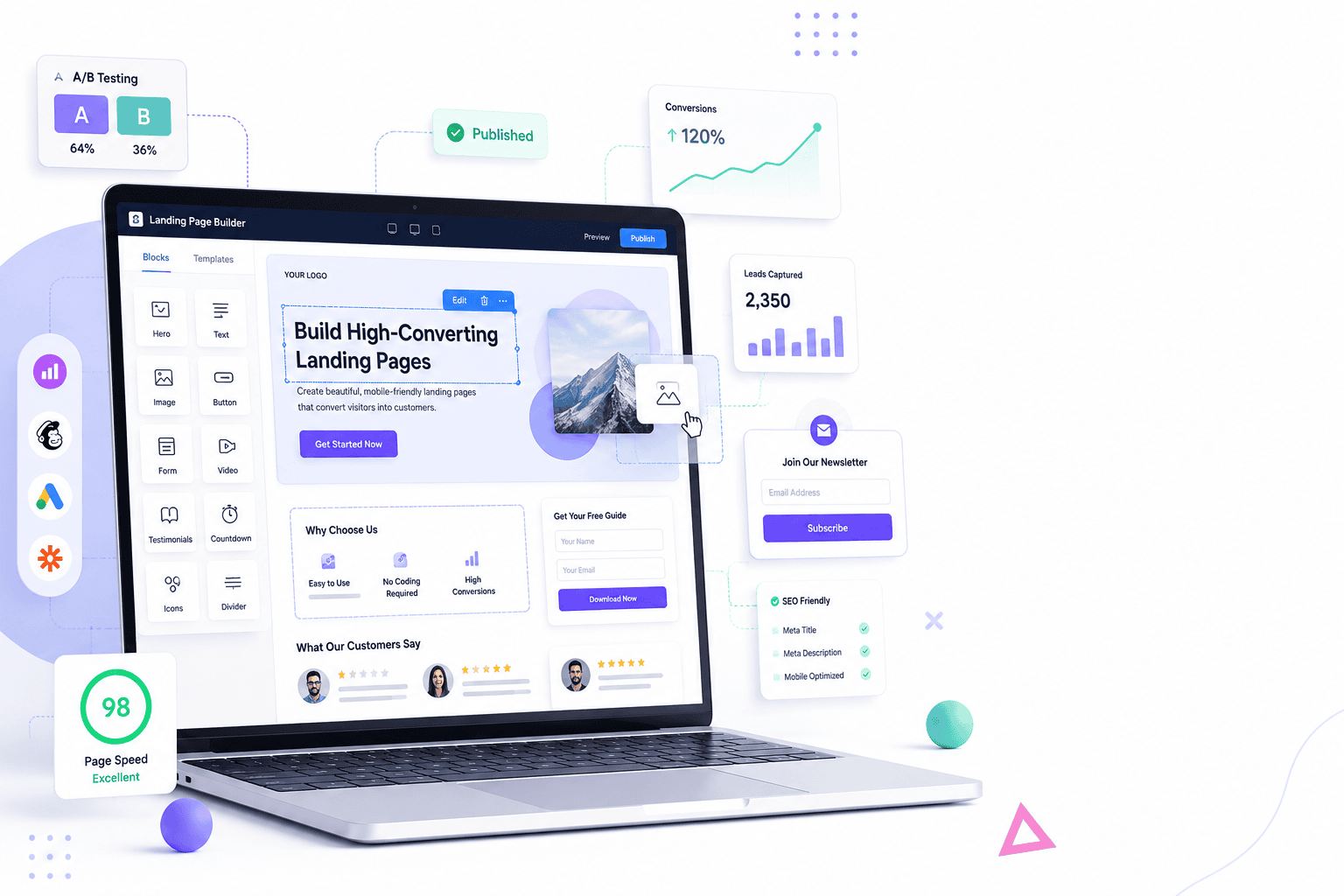
A landing page builder is software that allows users to create standalone web pages without extensive coding knowledge. These pages are typically designed around one objective, such as capturing leads, encouraging sign-ups, or promoting a specific offer.
Most modern platforms include visual editors, customizable templates, mobile-responsive designs, and integrations with marketing tools.
Why Businesses Use Dedicated Landing Pages
Unlike homepage designs or general service pages, landing pages are built to minimize distractions and encourage visitors to take a specific action.
Common use cases include:
- Collecting newsletter subscriptions
- Promoting product launches
- Generating sales inquiries
- Running seasonal campaigns
- Offering downloadable resources
- Registering attendees for events
By focusing on a single message and call to action, businesses can often improve conversion rates and better measure campaign performance.
Features That Matter Most
When comparing different platforms, it’s helpful to evaluate more than just pricing.
Easy Visual Editing
Drag-and-drop functionality allows marketers and business owners to publish pages without relying on developers for every update.
Responsive Design
Since many users browse on mobile devices, pages should automatically adjust to different screen sizes while maintaining usability.
Template Variety
Pre-designed layouts can reduce design time and provide inspiration for campaigns across different industries.
Integrations
Connections with CRM systems, email marketing software, analytics platforms, and automation tools simplify lead management and reporting.
Performance Tracking
Built-in analytics and testing capabilities make it easier to identify which headlines, forms, or layouts generate the best results.
Considerations for Marketing Agencies
Managing campaigns for multiple clients introduces additional requirements beyond page design.
Teams evaluating a landing page builder for agencies should look for features such as:
- Multiple workspaces or client accounts
- Shared editing and collaboration
- Permission controls
- Custom domains
- Reusable assets and templates
- Centralized reporting dashboards
These capabilities can improve workflow efficiency while helping maintain consistency across projects.
Can a Free Solution Be Enough?
Many startups and small businesses begin with a landing page builder for free to test ideas before investing in premium software.
Free plans may be suitable for:
- Personal projects
- Basic lead capture pages
- Early-stage businesses
- Learning how landing pages work
However, they may also include restrictions on traffic, branding, integrations, or advanced optimization features. As marketing efforts expand, upgrading to a paid plan may provide greater flexibility and scalability.
Why People Explore Alternatives to Established Platforms
Popular tools often set industry standards, but they may not fit every budget or workflow. For this reason, marketers frequently research alternatives based on pricing, usability, or feature requirements.
For example, someone searching for an Unbounce alternative may prioritize affordability, while another team might seek simpler collaboration features or different integration options.
Likewise, businesses considering an Instapage alternative may compare available templates, testing capabilities, publishing options, or support for multiple campaigns.
The best choice depends on individual business goals rather than brand recognition alone.
Questions to Ask Before Choosing a Platform
Before selecting a landing page solution, consider the following:
- How many campaigns will you manage each month?
- Will multiple team members need editing access?
- Do you require integrations with your existing marketing tools?
- Is mobile optimization included by default?
- Can the platform scale as your business grows?
- Does it provide reliable analytics and reporting?
- Are customization options sufficient for your brand requirements?
Answering these questions can narrow the list of suitable platforms and prevent costly migrations later.
Best Practices for High-Converting Landing Pages
Even the best software cannot guarantee results without thoughtful design. Keep these principles in mind:
- Use a clear and compelling headline.
- Focus on one primary call to action.
- Keep forms as short as possible.
- Include trust signals such as testimonials or certifications.
- Remove unnecessary navigation links that distract visitors.
- Optimize loading speed and mobile usability.
- Test different versions to improve performance over time.
Continuous experimentation often produces better outcomes than relying on assumptions.
Final Thoughts
Choosing the right landing page platform involves balancing usability, features, scalability, and budget. What works well for a solo entrepreneur may not meet the needs of a growing agency, and an enterprise solution may be more complex than a small business requires.
Instead of focusing solely on brand names or pricing, evaluate how well a platform supports your workflow, integrates with your existing tools, and helps you create pages that convert visitors into customers. A careful comparison today can save time and resources while supporting more effective marketing campaigns in the future.
Frequently Asked Questions (FAQs)
1. What is a landing page builder?
A landing page builder is a tool that helps users create dedicated web pages for marketing campaigns without requiring advanced coding skills. These pages are designed to encourage visitors to take a specific action, such as signing up, making a purchase, or submitting a form.
2. Why should I use a landing page instead of a regular website page?
Landing pages are focused on a single goal and typically remove unnecessary distractions. This targeted approach can improve conversion rates and make it easier to measure the success of marketing campaigns.
3. What features should I look for in a landing page builder?
Key features include a drag-and-drop editor, responsive design, customizable templates, integrations with marketing tools, analytics, A/B testing capabilities, and fast page loading performance.
4. Are free landing page builders worth using?
Free landing page builders can be a good starting point for individuals and small businesses. However, they often have limitations such as branded pages, restricted integrations, or traffic caps, making paid plans more suitable as your marketing needs grow.
5. How do agencies choose the right landing page builder?
Agencies often prioritize features like multiple client workspaces, team collaboration, permission management, reusable templates, custom domains, and centralized reporting to efficiently manage multiple campaigns.
6. How important are integrations in a landing page builder?
Integrations with CRM systems, email marketing platforms, analytics tools, and automation software help streamline lead management and improve overall marketing efficiency.
7. Can a landing page builder improve conversion rates?
While no tool guarantees results, a well-designed landing page combined with clear messaging, strong calls to action, and ongoing optimization can significantly improve conversion performance.
8. How do I choose the best landing page builder for my business?
Consider your budget, required features, team size, integration needs, scalability, ease of use, and long-term marketing goals before selecting a platform. Comparing multiple solutions can help you find the best fit.